
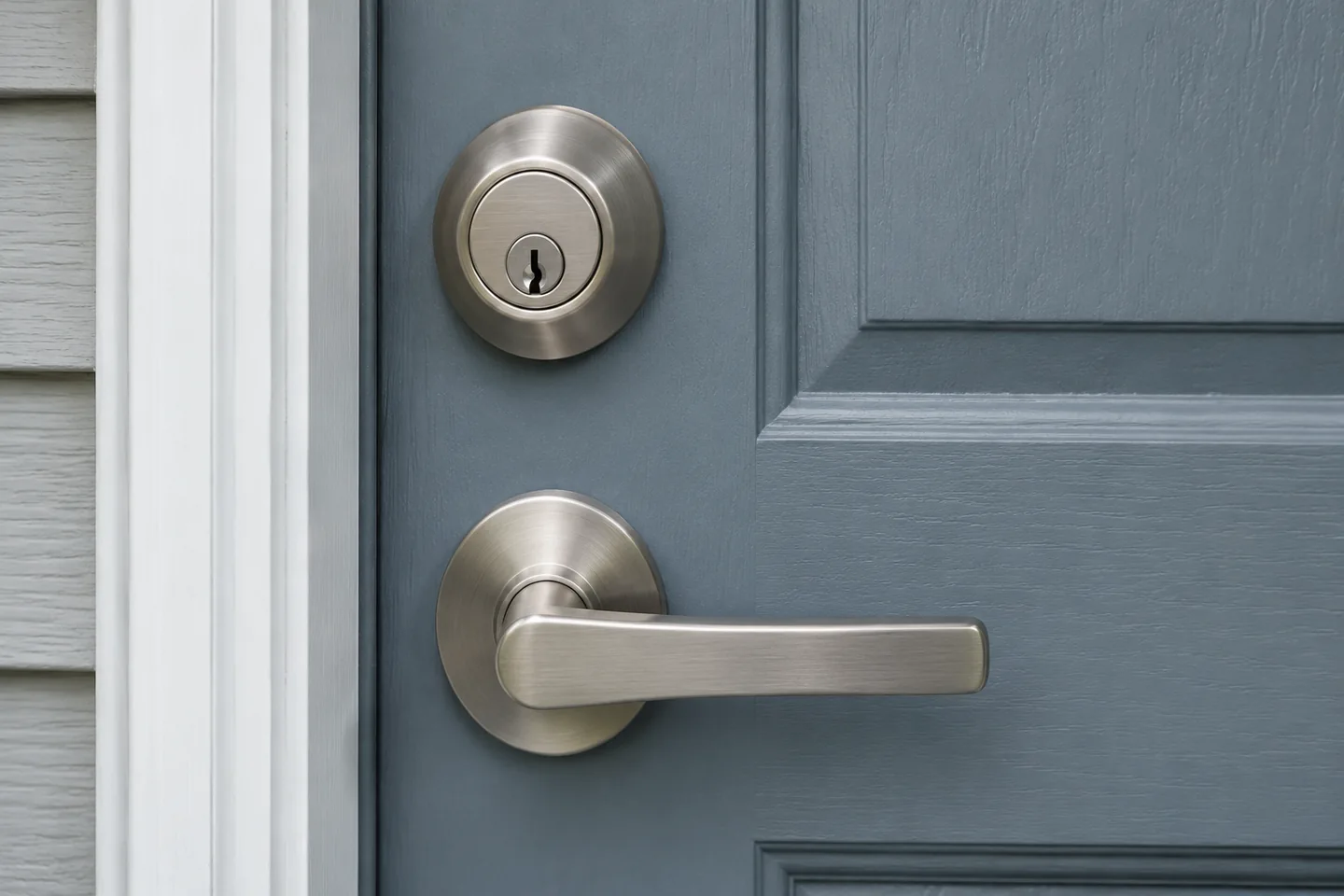
A new key can leave good hardware in place
At LockReach, we rekey suitable cylinders so the new key works and earlier keys no longer do. When the hardware is sound, that can leave the handle and visible trim in place. We assess a worn latch or a door-fit problem separately, so changing key access does not leave the mechanical fault unresolved. Our recommendation explains what can stay and what needs repair.
One key for several doors?
The front door and the side door can look similar while taking different key blanks. Matching their appearance doesn't establish that they can share a key. Different brands may use different keyways, and some doors may have more than one cylinder. A useful plan identifies the doors you want included and checks compatibility before choosing new parts. A separate garage-to-house door belongs in that plan if it is an entrance you use.
When the lock and the door disagree
A key that turns more easily with the door open may be telling a different story from a key that resists in every position. The latch has to meet the frame correctly, and a loose handle or a dragging door can change that relationship. Describe what you've already noticed during normal use. There is no need to force the key or repeatedly test a door that might leave you locked out.
Older doors deserve a closer look
Upland's historic resources include residential districts as well as the Euclid Avenue parkway. An older entrance may have hardware dimensions or marks left by earlier fittings that matter when a replacement is considered. That doesn't mean every old door needs special hardware. It means keeping the door's condition and appearance in the conversation instead of assuming a new lock will cover every existing cutout.
A keypad adds another kind of access
A physical key, a personal code and access through an app are separate things to manage. Changing one doesn't establish that the others have changed. Before choosing a smart lock, check the actual door preparation, product requirements and how household members will use it. Keep the ordinary mechanical operation in view, too. A connected feature does not correct a door that fails to latch properly.
Choose the result before the parts
We help with move-in rekeys, difficult locks and planned changes to key access. If several outcomes overlap, we identify the doors involved and explain which work addresses each one. The proposal lists the repair, retained hardware and any optional changes so you can decide what to include.
A clearer result starts
with the right distinction.
Do I have to replace every handle after moving?
Not automatically. Rekeying may suit compatible, working hardware. Damaged hardware or a different design goal can change that choice.
Will a new cylinder fix a door that drags?
A key change and the fit of the door are separate issues. Include both in the assessment.